
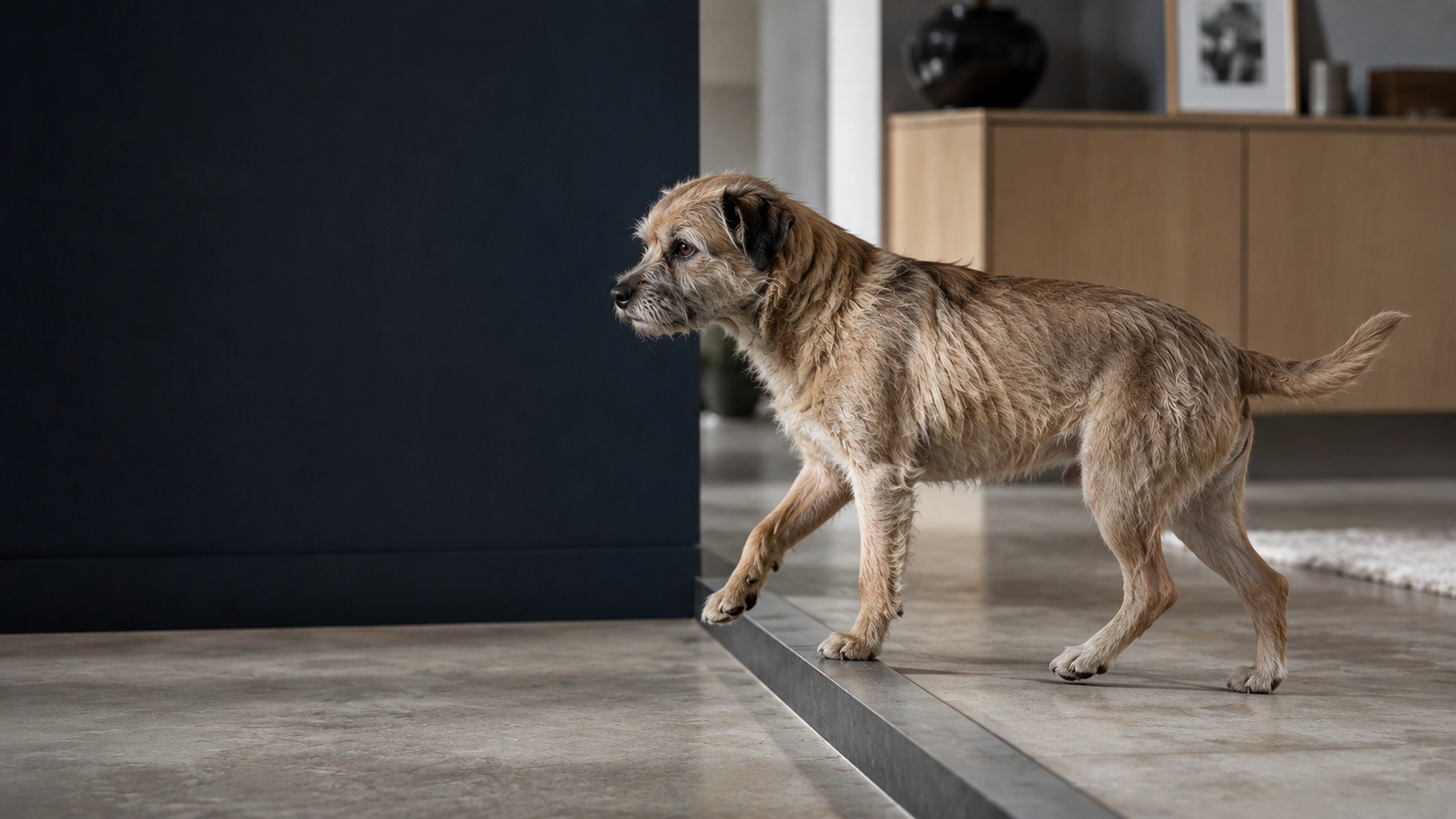
Pain can look like a change in routine
Not every dog in pain limps. Reluctance to use stairs, slower rising, reduced play, posture changes, irritability or difficulty finding a comfortable position can all be relevant clues.
Observe pattern and context
Consider when the sign occurs, how long it lasts, whether it worsens after activity, whether asymmetry is present and what has changed from the dog’s normal behavior. Home videos can help document movements that may not appear during the appointment.
Assessment before medication
Pain may be musculoskeletal, neurological or systemic. Examination directs investigation and helps establish a safer plan rather than treating a sign without understanding its likely cause.
References
Scientific and institutional reading
Reference sources for further reading. This page is educational and does not replace an individual clinical assessment.